Introduction
First fix carpentry is a vital phase in home extension projects. It serves as the foundation for later improvements, such as plastering. This initial carpentry stage is not just about laying wood; it constructs a strong framework that underpins the entire structure. Understanding first fix carpentry helps homeowners and construction professionals appreciate the complexities involved in creating a durable and functional space that meets both aesthetic and safety standards.
Understanding First Fix Carpentry
Definition and Overview
First fix carpentry refers to the initial construction phase during which the structural framework of a building extension is developed. Unlike second fix carpentry, which focuses on installing finishes like doors, skirtings, and fittings, first fix encompasses core structural components vital to the project’s integrity. This stage typically includes installing essential elements such as floor joists, wall studs, roof trusses, and bracing, all of which provide stability and support for the entire structure.
The Role of First Fix Carpentry
The importance of first fix carpentry in home extensions cannot be overstated. This phase solidifies key decisions about layout and design. A well-executed first fix ensures that all subsequent construction phases, including electrical, plumbing, and plastering, proceed smoothly and without delays. A solid framework not only guarantees structural integrity but also integrates essential services seamlessly, creating a well-coordinated environment for further development.
Types of Wooden Structures Involved
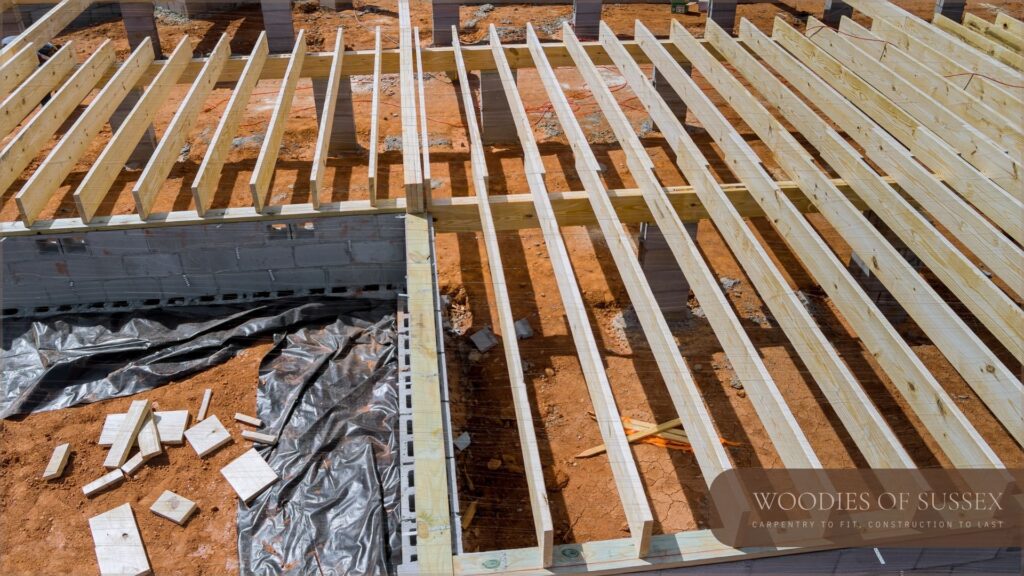
- Floor Joists: These horizontal beams support the floor structure, providing the strength necessary to bear loads.
- Stud Walls: Vertical wooden frames that form the walls, essential for supporting insulation, plasterboard, and other finishes.
- Roof Trusses: Triangular structures that support the roof, providing strength and stability across larger spans without the need for load-bearing walls.
Key Materials Used
The primary materials in first fix carpentry include:
- Softwood: Commonly used for joists and stud walls due to its balance of strength and light weight.
- Engineered Wood Products: Items like I-beams and laminated veneer lumber are popular choices, offering superior strength and consistent quality.
Common Construction Techniques
First fix carpentry employs various construction techniques, such as:
- Platform Framing: Where floors are constructed one level at a time.
- Balloon Framing: Utilising long vertical studs that extend from the foundation to the roof.
Key Components of First Fix Carpentry
Practical Examination of Core Elements
When executing first fix carpentry, several essential elements ensure that the structure is both functional and in line with design specifications.
Installation of Joists
Floor joists are often the first structural elements installed. Proper placement is critical and requires precise measurements and calculations to ensure they support expected loads.
- Critical Measurements: Joists should ideally be positioned at intervals specified in building regulations, typically 400mm or 600mm apart. This spacing affects everything from floor weight capacity to insulation efficiency.
Constructing Stud Walls
Once the floor joists are set, stud walls are erected. This involves:
- Cutting the Studs: Each stud is cut to the exact height required between the floor and ceiling.
- Securing the Studs: They are attached using nails or screws, ensuring they are level and aligned.
- Bracing the Walls: Diagonal bracing may be added to prevent wobbling and enhance structural integrity.
Roof Structures
Roof trusses follow the completion of the walls, supplying the necessary overhead support. Their design is crucial; often, pre-fabricated trusses are used to reduce site work and ensure uniform performance.
Materials Commonly Used
- Softwood Lumber: Commonly used for joists and studs due to its lightweight and cost-effectiveness.
- Engineered Wood: Selected for its superior strength and stability, essential for larger structures like roofs.
- OSB Plywood: Frequently used for sheathing, adding extra shear strength and acting as a base for finishing materials.
Importance of Planning and Preparation
Meticulous Planning Prior to First Fix
The transition into first fix carpentry is supported by detailed planning and preparation. Architectural collaboration is crucial for the success of home extensions.
Collaborating with Architects and Builders
Creating detailed blueprints is vital in this phase. Architects, builders, and clients should work closely to finalise designs that fulfil aesthetic desires while adhering to structural regulations.
- Blueprints: Accurate blueprints ensure every element is accounted for, facilitating a smooth construction process.
Surveys and Site Inspections
Before work begins, site inspections assess existing conditions and verify that the foundation is stable and level.
- Regulatory Compliance: Adhering to local building codes can mitigate costly revisions and safety hazards later on.
Essential Tools and Equipment Used in First Fix Carpentry
Overview of Tools
Appropriate tools and equipment are crucial for successful first fix carpentry, ensuring tasks are executed accurately and efficiently.
Key Tools
- Saws: Circular saws and hand saws are fundamental for cutting timber to size.
- Levels: Essential for ensuring structures are level and plumb during installation.
- Nail Guns: Used for rapid fastening, enhancing both speed and efficiency in the construction process.
- Measuring Tapes and Squares: Accurate measurements are critical; these tools help verify dimensions and angles for proper alignment.
Safety Protocols
Safety is paramount in carpentry work. Proper tool use requires adherence to safety protocols:
- Personal Protective Equipment (PPE): Always wear appropriate gear, including gloves, safety goggles, and ear protection when working with power tools.
- Tool Maintenance: Regularly inspect tools to ensure they remain in good working condition.
Quality Control and Inspections
Importance of Quality Control
Quality control measures are vital during the first fix phase, ensuring that structures meet safety standards and are fit for purpose.
Inspections During First Fix
Quality control involves multiple inspections throughout the first fix process to confirm compliance with building regulations.
- Checklists: Builders often rely on checklists covering aspects such as joist alignment, stud wall spacing, and roof support integrity.
Necessary Regulators
Local authorities may require inspections at various milestones to ensure compliance with building codes and regulations.
- Building Control Officers: These professionals assess the work and approve it before subsequent phases can begin, ensuring safe and effective construction practices.
Transitioning to Plastering
Preparing for Plastering
Once the first fix phase is completed, the transition to plastering begins, which is essential for creating a finished interior and aesthetic value.
Final Preparations
Before plastering can occur, a series of preparatory steps must be taken:
- Installation of Utilities: Electrical wiring and plumbing must be positioned correctly within the walls to avoid future complications.
- Surface Preparation: Clean surfaces free of debris are essential for proper plaster adherence, leading to durable finishes.
Significance of First Fix in Plastering
The successful completion of first fix carpentry greatly impacts plastering efficacy.
- Structural Strength: A well-constructed framework offers a solid base for plaster application, ensuring no settling or bowing occurs afterward.
- Integrated Systems: Properly positioned electrical and plumbing systems assist in achieving a professional finish, remaining concealed yet accessible for future maintenance.

Conclusion
In summary, first fix carpentry is foundational in home extensions, providing the groundwork for successful plastering and the overall quality of the finished structure. Understanding this process’s complexities aids homeowners in appreciating the construction journey and equips professionals with the insights needed for effective execution. Whether you are a homeowner planning an extension or a professional in the industry, recognising the significance of first fix carpentry enables informed decision-making, ensuring the integrity of each project.
By focusing on planning, materials, tools, and quality control embedded in first fix carpentry, you can navigate home extension intricacies confidently and enjoy a beautifully finished space for years. Start your extension project with meticulous attention to first fix carpentry, setting the stage for success from the beginning!